Author name: klinelogistics.ca

Blog

Expedited Air Freight Canada: Fast Solutions When Every Hour Matters

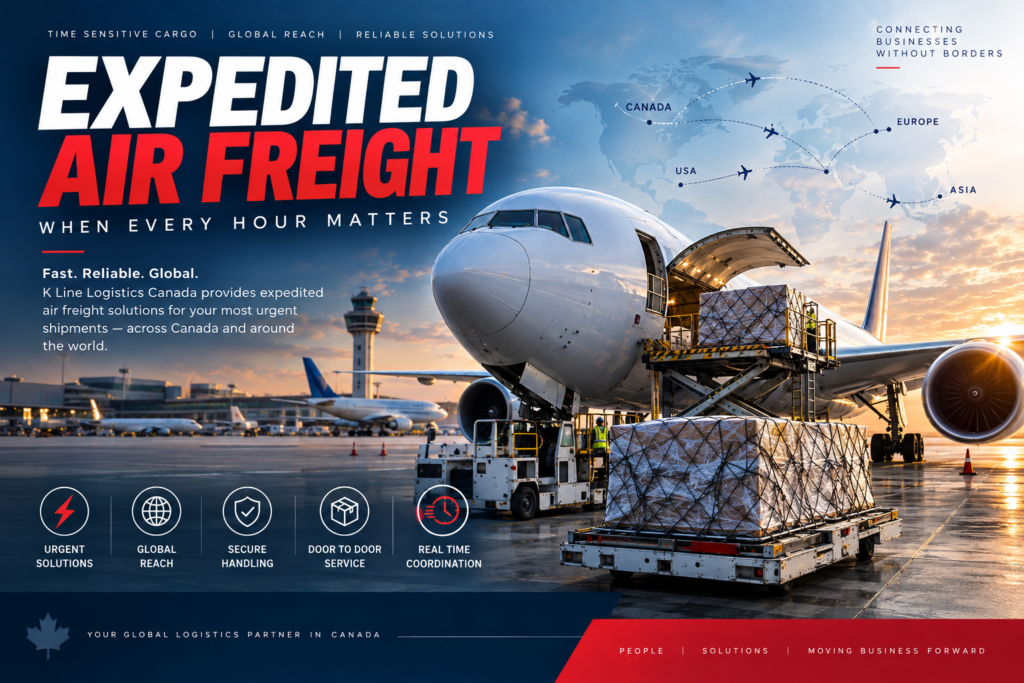
When a shipment is urgent, standard transportation timelines may not be an option. A delayed component can stop production, missing inventory can affect customer orders, and critical cargo arriving days late can create significant costs for a business. That’s where expedited air freight comes in. At K Line Logistics Canada, we provide expedited air freight solutions for businesses that need to move time-sensitive cargo quickly across Canada or internationally. From urgent replacement parts and commercial goods to critical inventory, our team helps coordinate the fastest practical transportation solution based on your shipment requirements. What Is Expedited Air Freight? Expedited air freight is a priority transportation service designed for shipments that need to reach their destination faster than conventional freight services. Instead of optimizing primarily around transportation cost, expedited shipping focuses on speed, routing efficiency and reduced transit time. Depending on the origin, destination, cargo and urgency, an expedited air freight solution may involve priority air cargo bookings, direct routing where available, airport-to-airport transportation, coordinated pickup and delivery, or other time-critical logistics arrangements. The objective is simple: move your cargo as quickly and efficiently as possible. When Should You Use Expedited Air Freight? Not every shipment needs expedited service. However, when the cost of a delay becomes greater than the cost of faster transportation, expedited air freight can become an important logistics option. Businesses commonly require urgent air freight for situations such as: For these shipments, even a difference of one or two days can have a major operational impact. Expedited Air Freight vs. Standard Air Freight Both services use air transportation, but the priorities can be different. With standard international air freight, businesses typically balance transit time, routing and transportation cost. With expedited air freight, speed becomes the primary consideration. Routing and available transportation options can be evaluated around the shipment’s deadline rather than simply selecting the most economical air cargo option. For example, a business replenishing normal inventory may choose standard air freight. A manufacturer waiting for a critical component needed to restart production may instead require expedited transportation. At K Line Logistics Canada, we evaluate the shipment requirements before recommending an appropriate transportation strategy. How Expedited Air Freight Works Time-critical logistics requires coordination. Before arranging transportation, several factors need to be considered, including the cargo dimensions and weight, commodity type, origin and destination, required delivery deadline, customs requirements and available flight options. Once the requirements are understood, the shipment can be coordinated through the appropriate air cargo network. 1. Urgent Shipment Assessment The process starts with understanding exactly what needs to move and when it needs to arrive. Providing accurate cargo information from the beginning can help avoid unnecessary delays. Important information includes: Origin and destinationCargo dimensionsTotal weightNumber of pieces or palletsCommodity descriptionRequired delivery date or timeImport or export requirements 2. Routing and Air Freight Coordination Available transportation options can then be evaluated based on the shipment requirements. For expedited freight, the fastest practical routing may be prioritized over the least expensive routing. 3. Cargo Pickup Depending on the service arrangement, transportation can be coordinated from the shipper’s location to the appropriate airport or cargo facility. Efficient ground transportation is particularly important for urgent shipments because saving time in the air means little if the cargo is delayed before reaching or after leaving the airport. 4. Air Transportation The cargo travels to its destination airport using the selected routing. For international shipments, routing may depend on airline availability, cargo capacity, airport connectivity, shipment characteristics and regulatory requirements. 5. Customs Processing International expedited freight still needs to satisfy applicable customs and import requirements. Documentation should therefore be considered early in the process rather than waiting until the cargo reaches its destination. 6. Final Delivery Where arranged, the shipment can continue from the destination airport to the consignee, warehouse, production facility, distribution centre or other final destination. The result is a coordinated door-to-door expedited freight solution. International Expedited Air Freight Urgent shipments aren’t limited to domestic transportation. Businesses increasingly operate global supply chains where components, products and inventory may need to move between Canada, the United States, Europe, Asia and other international markets. K Line Logistics Canada helps coordinate international expedited air freight for Canadian businesses importing and exporting time-sensitive cargo. International transportation introduces additional considerations such as customs documentation, tariff classification, duties and taxes, shipment declarations and country-specific import requirements. Planning these requirements alongside transportation can help reduce avoidable delays. Expedited Air Freight and CARM in Canada Businesses importing commercial goods into Canada should also understand their obligations under the CBSA Assessment and Revenue Management (CARM) system. CARM is an important part of how commercial importers interact with the Canada Border Services Agency for accounting and revenue management. This becomes particularly important with expedited shipments. When businesses are paying for faster transportation, administrative or customs-related delays can undermine the benefit of using an expedited service. Importers can access the official CBSA CARM User Guide for onboarding information. Registered businesses can also access the official CARM Client Portal Login. Why Businesses Choose K Line Logistics Canada for Expedited Air Freight When freight is urgent, communication and coordination become just as important as transportation. At K Line Logistics Canada, we understand that expedited shipments usually have a reason behind their urgency. There may be a customer waiting, a production line at risk, inventory running out or an important deadline approaching. Our approach focuses on understanding that requirement and finding an appropriate transportation solution. We support businesses with: Rather than offering a one-size-fits-all shipping option, we evaluate the requirements of each shipment. Expedited Air Freight Across Canada Whether your business operates in Toronto, Mississauga, Brampton, Hamilton, Kitchener-Waterloo, Montreal, Vancouver, Calgary, Edmonton or another Canadian market, access to international air cargo networks can be essential when time matters. K Line Logistics Canada helps Canadian businesses coordinate shipments domestically and between Canada and international destinations. If you are searching for an expedited air freight company in Canada, the most important first step is providing your logistics partner with accurate shipment details and your
Blog

Domestic Air Freight Services in Canada – Fast & Reliable Shipping with K line Logistics Canada

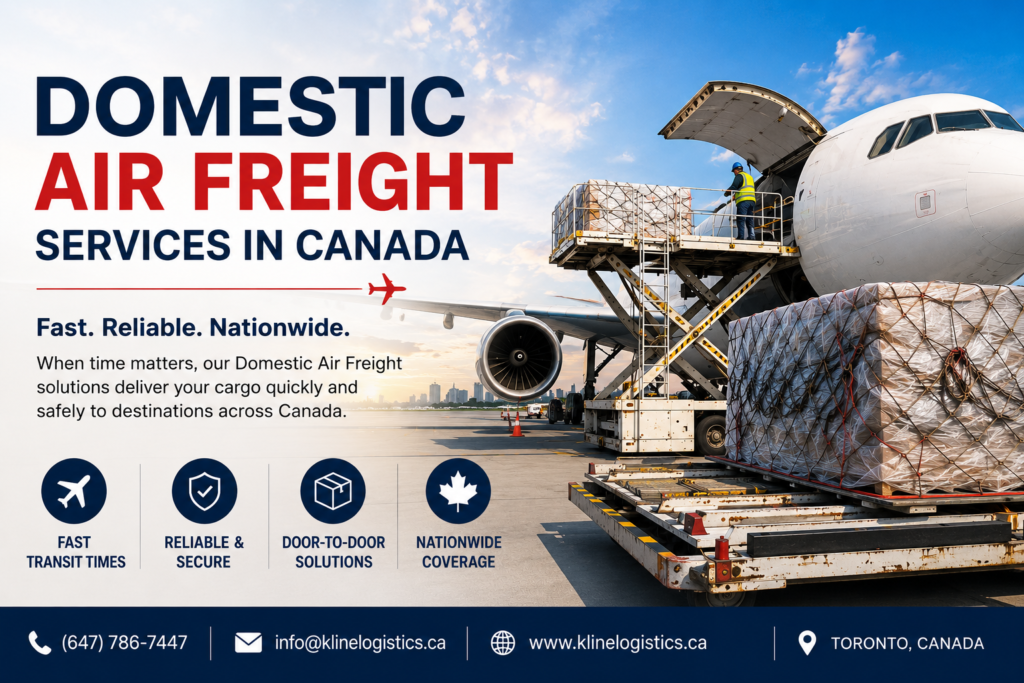
When your shipment needs to reach its destination quickly, domestic air freight in Canada can be one of the fastest and most reliable transportation options. Whether you need to move commercial goods from Toronto to Vancouver, Montreal, Calgary, Edmonton, Halifax, or another Canadian destination, K line Logistics Canada provides flexible air freight solutions designed around your shipment requirements. At K line Logistics Canada, we understand that every shipment is different. Some businesses prioritize speed, while others need the right balance between transit time, reliability, and transportation cost. Our team works closely with customers to understand their requirements and recommend an appropriate domestic freight solution. Why Choose Domestic Air Freight? Canada is a large country, and transporting cargo by road from one province to another can take several days. When delivery timelines are important, domestic air freight services can significantly reduce transit time. Air freight may be suitable when: K line Logistics Canada can help businesses evaluate their transportation requirements and determine whether air freight or another freight option makes the most sense. Customized Domestic Air Freight Solutions Before arranging a shipment, our logistics team considers several important factors. How Quickly Does the Cargo Need to Arrive? Transit time is one of the biggest reasons businesses choose air freight in Canada. We work to understand your required delivery date and identify suitable transportation options. For extremely time-sensitive shipments, expedited services may be considered depending on origin, destination, cargo specifications, and carrier availability. What Are the Cargo Dimensions and Weight? The weight and dimensions of a shipment can significantly affect air freight planning and pricing. Our team reviews the cargo information before recommending a shipping option so customers can better understand the available transportation choices. What Is the Shipment Budget? Air freight generally provides faster transportation than standard ground or ocean freight, but speed can come at a higher cost. At K line Logistics Canada, our goal is to help customers find an appropriate balance between cost, transit time, and reliability. Explore our complete range of freight and logistics solutions on the K line Logistics Canada Services page. Domestic Air Freight Across Canada K line Logistics Canada helps businesses coordinate domestic freight transportation between major Canadian markets and destinations. Depending on the shipment requirements and available services, domestic air cargo can be coordinated between cities such as: Toronto β€’ Montreal β€’ Vancouver β€’ Calgary β€’ Edmonton β€’ Ottawa β€’ Winnipeg β€’ Halifax β€’ and other Canadian destinations Our team can coordinate different stages of the shipment, helping simplify the transportation process for our customers. Door-to-Door Domestic Air Freight For businesses looking for a more complete logistics solution, K line Logistics Canada can coordinate door-to-door domestic air freight services. A typical shipment may include: Instead of coordinating multiple transportation providers independently, customers can work with an experienced logistics team to manage their freight requirements. Air Freight vs. Ground Freight – Which Should You Choose? The right transportation method depends primarily on your shipment’s urgency, size, destination, and budget. Domestic air freight is generally worth considering when speed is the priority. Ground freight may be more economical when the delivery schedule is flexible or when cargo characteristics make air transportation less practical. Our team can review your requirements and help identify a suitable option rather than automatically recommending the fastest or most expensive service. Domestic and International Freight Solutions In addition to domestic transportation, K line Logistics Canada provides logistics solutions for businesses moving cargo internationally. For larger international shipments where transit time is more flexible, ocean transportation may provide a cost-effective alternative to air freight. Learn more about our Ocean Freight Services. Why Choose K line Logistics Canada for Air Freight? Freight transportation involves more than simply moving cargo from one location to another. Good logistics planning requires understanding the shipment, selecting an appropriate transportation method, coordinating different parties, and keeping the customer informed throughout the process. K line Logistics Canada focuses on providing practical logistics solutions based on each customer’s individual requirements. Learn more About K line Logistics Canada and our approach to freight transportation. Get a Quote for Domestic Air Freight in Canada Whether you need to move an urgent shipment from Toronto to Vancouver, Toronto to Calgary, Montreal to Toronto, or between other Canadian destinations, K line Logistics Canada can help you explore suitable transportation options. Tell us your: Our team can review your requirements and help determine an appropriate freight solution. Contact K line Logistics Canada today to discuss your domestic air freight requirements in Canada.

Blog

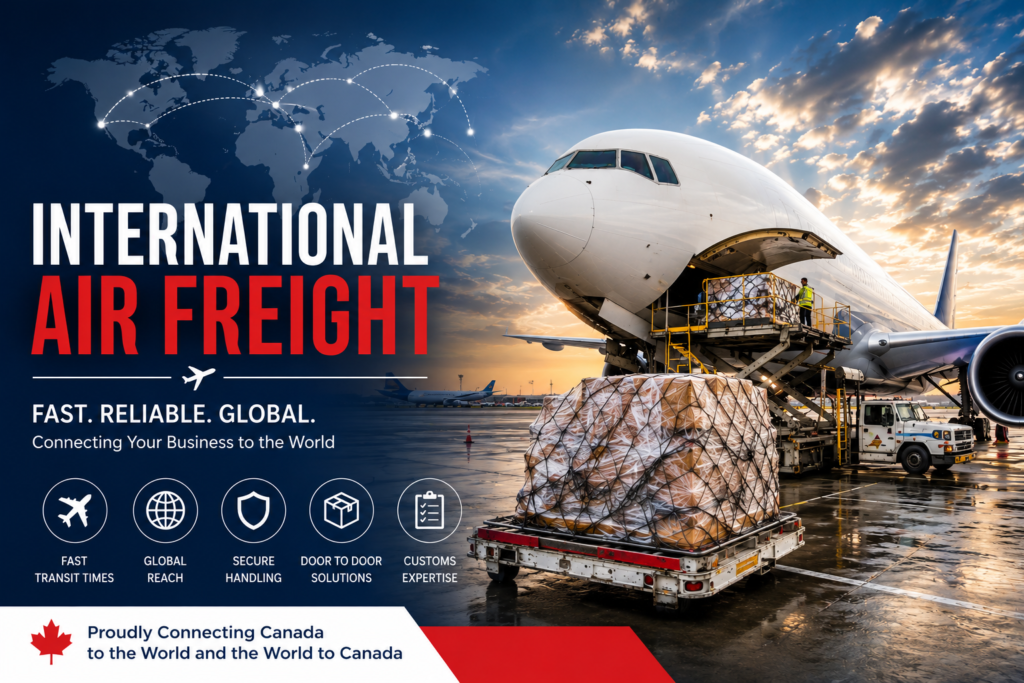
International Air Freight: Fast, Reliable & Global Shipping Solutions

Navigating international trade regulations can be complex, especially with customs duties, import restrictions, and compliance requirements constantly evolving. This is where customs brokerage services play a crucial role. A customs broker acts as an intermediary between businesses and government agencies, ensuring that shipments clear customs smoothly, avoid delays, and comply with import/export laws. In this blog, we explore the role of customs brokerage in international trade, why it is essential, and how businesses can benefit from professional customs services. 1. What is Customs Brokerage? Customs brokerage is the process of managing customs clearance for imported and exported goods. It involves: βœ” Handling documentation and regulatory compliance.βœ” Ensuring accurate tariff classifications and duty payments.βœ” Facilitating smooth import/export processes across borders. πŸ“Œ Without proper customs brokerage, businesses risk delays, penalties, and increased shipping costs. 2. Why is Customs Brokerage Important in International Trade? The role of customs brokerage in international trade is critical for ensuring a smooth supply chain. Here’s why: βœ” Compliance with Trade Regulations: Customs brokers stay updated with import/export laws and CBSA (Canada Border Services Agency) requirements.βœ” Faster Customs Clearance: They handle the paperwork, reducing the risk of shipment delays.βœ” Cost Savings on Duties & Taxes: Proper tariff classification helps businesses avoid overpaying customs fees.βœ” Risk Mitigation: They prevent fines and compliance issues by ensuring accurate documentation. πŸ“Œ Solution: Working with a professional customs brokerage service can save time, reduce costs, and streamline international trade. 3. How Does the Customs Clearance Process Work? The customs clearance process involves multiple steps to ensure shipments comply with trade laws. Step 1: Import Documentation Submission βœ” Commercial invoice with detailed shipment information.βœ” Bill of lading (BOL) for cargo movement records.βœ” HS Code classification to determine import duties. Step 2: Customs Duty & Tax Calculation βœ” Customs brokers calculate duties, tariffs, and GST/HST.βœ” They apply any eligible trade agreements to reduce costs. Step 3: Cargo Inspection & Clearance βœ” CBSA or other agencies may inspect goods for compliance violations.βœ” If all documents are in order, shipments are cleared for release. πŸ“Œ Businesses must ensure all documents are accurate to prevent customs delays. 4. How Customs Brokers Help Businesses Save Money One of the biggest advantages of working with a customs broker is the ability to reduce import/export costs. βœ” Duty Optimization: Brokers identify cost-saving opportunities, such as tariff exemptions and free trade agreements.βœ” Avoiding Penalties: They ensure businesses comply with CBSA regulations, preventing costly fines.βœ” Efficient Supply Chain Management: By reducing delays, brokers help businesses avoid storage fees and missed deadlines. πŸ“Œ A professional customs broker helps businesses increase profitability by lowering customs-related expenses. 5. Key Services Offered by a Customs Broker At K Line Logistics Canada, we offer comprehensive customs brokerage services that include: βœ” Import & Export Documentation: Handling commercial invoices, BOLs, and permits.βœ” Tariff Classification & Duty Calculation: Ensuring correct HS Code assignments.βœ” CBSA Compliance Support: Staying up to date with changing trade laws.βœ” CARM CBSA Registration Assistance: Helping businesses adapt to CARM (CBSA Assessment & Revenue Management). πŸ“Œ Whether you’re a small business or a multinational company, customs brokerage simplifies international shipping. 6. Common Challenges in Customs Clearance & How to Overcome Them Many businesses face challenges in customs clearance, such as: ❌ Incorrect HS Code Classification β†’ βœ… Work with a licensed customs broker to ensure accuracy.❌ Missing Import Permits β†’ βœ… Customs brokers help businesses obtain the right permits before shipment.❌ Unexpected Duty & Tax Costs β†’ βœ… Brokers identify duty refunds and exemptions.❌ CBSA Inspection Delays β†’ βœ… Proper documentation ensures faster customs clearance. πŸ“Œ Need help avoiding customs issues? K Line Logistics provides expert brokerage services to handle these challenges. 7. The Future of Customs Brokerage in International Trade With trade regulations becoming more complex, businesses must stay ahead by adopting digital customs solutions. βœ” CBSA’s CARM system is making electronic customs management mandatory.βœ” Blockchain technology is enhancing supply chain transparency.βœ” AI-driven customs compliance is reducing errors and speeding up clearance. πŸ“Œ By leveraging technology, customs brokers help businesses adapt to evolving trade regulations. 8. Why Choose K Line Logistics for Customs Brokerage? At K Line Logistics Canada, we provide: βœ” End-to-end customs brokerage services for smooth import/export clearance.βœ” Expert guidance on CBSA compliance & tariff classification.βœ” Seamless integration with freight and warehousing solutions.βœ” 24/7 customer support to handle customs issues efficiently. πŸ“Œ Looking for a reliable customs brokerage partner? πŸ‘‰ Contact K Line Logistics For expert insights on Canada’s customs and trade industry, read our latest feature on Trending Canada.

Customs officer checking documents for international trade compliance.
Blog

The Role of Customs Brokerage in International Trade

Navigating international trade regulations can be complex, especially with customs duties, import restrictions, and compliance requirements constantly evolving. This is where customs brokerage services play a crucial role. A customs broker acts as an intermediary between businesses and government agencies, ensuring that shipments clear customs smoothly, avoid delays, and comply with import/export laws. In this blog, we explore the role of customs brokerage in international trade, why it is essential, and how businesses can benefit from professional customs services. 1. What is Customs Brokerage? Customs brokerage is the process of managing customs clearance for imported and exported goods. It involves: βœ” Handling documentation and regulatory compliance.βœ” Ensuring accurate tariff classifications and duty payments.βœ” Facilitating smooth import/export processes across borders. πŸ“Œ Without proper customs brokerage, businesses risk delays, penalties, and increased shipping costs. 2. Why is Customs Brokerage Important in International Trade? The role of customs brokerage in international trade is critical for ensuring a smooth supply chain. Here’s why: βœ” Compliance with Trade Regulations: Customs brokers stay updated with import/export laws and CBSA (Canada Border Services Agency) requirements.βœ” Faster Customs Clearance: They handle the paperwork, reducing the risk of shipment delays.βœ” Cost Savings on Duties & Taxes: Proper tariff classification helps businesses avoid overpaying customs fees.βœ” Risk Mitigation: They prevent fines and compliance issues by ensuring accurate documentation. πŸ“Œ Solution: Working with a professional customs brokerage service can save time, reduce costs, and streamline international trade. 3. How Does the Customs Clearance Process Work? The customs clearance process involves multiple steps to ensure shipments comply with trade laws. Step 1: Import Documentation Submission βœ” Commercial invoice with detailed shipment information.βœ” Bill of lading (BOL) for cargo movement records.βœ” HS Code classification to determine import duties. Step 2: Customs Duty & Tax Calculation βœ” Customs brokers calculate duties, tariffs, and GST/HST.βœ” They apply any eligible trade agreements to reduce costs. Step 3: Cargo Inspection & Clearance βœ” CBSA or other agencies may inspect goods for compliance violations.βœ” If all documents are in order, shipments are cleared for release. πŸ“Œ Businesses must ensure all documents are accurate to prevent customs delays. 4. How Customs Brokers Help Businesses Save Money One of the biggest advantages of working with a customs broker is the ability to reduce import/export costs. βœ” Duty Optimization: Brokers identify cost-saving opportunities, such as tariff exemptions and free trade agreements.βœ” Avoiding Penalties: They ensure businesses comply with CBSA regulations, preventing costly fines.βœ” Efficient Supply Chain Management: By reducing delays, brokers help businesses avoid storage fees and missed deadlines. πŸ“Œ A professional customs broker helps businesses increase profitability by lowering customs-related expenses. 5. Key Services Offered by a Customs Broker At K Line Logistics Canada, we offer comprehensive customs brokerage services that include: βœ” Import & Export Documentation: Handling commercial invoices, BOLs, and permits.βœ” Tariff Classification & Duty Calculation: Ensuring correct HS Code assignments.βœ” CBSA Compliance Support: Staying up to date with changing trade laws.βœ” CARM CBSA Registration Assistance: Helping businesses adapt to CARM (CBSA Assessment & Revenue Management). πŸ“Œ Whether you’re a small business or a multinational company, customs brokerage simplifies international shipping. 6. Common Challenges in Customs Clearance & How to Overcome Them Many businesses face challenges in customs clearance, such as: ❌ Incorrect HS Code Classification β†’ βœ… Work with a licensed customs broker to ensure accuracy.❌ Missing Import Permits β†’ βœ… Customs brokers help businesses obtain the right permits before shipment.❌ Unexpected Duty & Tax Costs β†’ βœ… Brokers identify duty refunds and exemptions.❌ CBSA Inspection Delays β†’ βœ… Proper documentation ensures faster customs clearance. πŸ“Œ Need help avoiding customs issues? K Line Logistics provides expert brokerage services to handle these challenges. 7. The Future of Customs Brokerage in International Trade With trade regulations becoming more complex, businesses must stay ahead by adopting digital customs solutions. βœ” CBSA’s CARM system is making electronic customs management mandatory.βœ” Blockchain technology is enhancing supply chain transparency.βœ” AI-driven customs compliance is reducing errors and speeding up clearance. πŸ“Œ By leveraging technology, customs brokers help businesses adapt to evolving trade regulations. 8. Why Choose K Line Logistics for Customs Brokerage? At K Line Logistics Canada, we provide: βœ” End-to-end customs brokerage services for smooth import/export clearance.βœ” Expert guidance on CBSA compliance & tariff classification.βœ” Seamless integration with freight and warehousing solutions.βœ” 24/7 customer support to handle customs issues efficiently. πŸ“Œ Looking for a reliable customs brokerage partner? πŸ‘‰ Contact K Line Logistics For expert insights on Canada’s customs and trade industry, read our latest feature on Trending Canada.

Trucks transporting shipments using FTL and LTL freight solutions.
Blog

Choosing Between FTL and LTL Trucking: Which One is Right for Your Business?

When shipping freight, businesses often face a critical decision: Should they use Full Truckload (FTL) or Less-Than-Truckload (LTL) trucking? Each option has distinct advantages depending on factors like shipment size, cost, delivery speed, and cargo type. In this blog, we’ll break down the differences between FTL and LTL trucking and help you decide which option is best for your business. 1. What is FTL (Full Truckload) Trucking? FTL (Full Truckload) refers to shipping an entire truck’s worth of goods from one location to another. This method is ideal for businesses with large shipments that fill an entire truck. βœ” Direct Delivery: Cargo moves from point A to point B without multiple stops.βœ” Faster Transit Times: No delays due to multiple pickups or drop-offs.βœ” More Secure: Goods remain in the same truck throughout the journey. πŸ“Œ Best for: Large shipments, fragile or high-value goods, and time-sensitive deliveries. FTL Trucking Example: A manufacturer shipping 40,000 pounds of products to a warehouse would benefit from FTL trucking services for faster and more secure delivery. 2. What is LTL (Less-Than-Truckload) Trucking? LTL (Less-Than-Truckload) is designed for smaller shipments that don’t require a full truck. Multiple businesses share the space, and each shipment is consolidated into a single truck. βœ” Cost-Effective: Businesses only pay for the space they use.βœ” Ideal for Small Shipments: Shipments range from 150 to 15,000 pounds.βœ” Eco-Friendly: Reduces fuel consumption by consolidating loads. πŸ“Œ Best for: Small to mid-sized shipments, e-commerce, and cost-conscious businesses. LTL Trucking Example: An e-commerce business shipping 5,000 pounds of inventory to multiple retailers can reduce costs with LTL trucking services. 3. Key Differences Between FTL and LTL Trucking Factor FTL Trucking βœ… LTL Trucking βœ… Cost More expensive but efficient Cost-effective for smaller shipments Transit Time Faster (direct shipment) Slower (multiple stops) Shipment Size Large shipments (15,000+ lbs) Small to mid-sized shipments (150-15,000 lbs) Security More secure (one truck per shipment) Higher risk of damage (shared truck) Best for Urgent, fragile, or bulk shipments Small businesses & frequent deliveries πŸ“Œ Quick Tip: If speed and security are priorities, choose FTL. If saving money is more important, choose LTL. 4. Pros & Cons of FTL and LTL Trucking βœ… FTL Trucking: Pros & Cons βœ” Faster delivery with fewer stopsβœ” Less handling = lower risk of damageβœ” Ideal for high-volume shipments ❌ Higher cost compared to LTL❌ Not cost-effective for small shipments βœ… LTL Trucking: Pros & Cons βœ” Lower cost, ideal for small businessesβœ” More flexible shipping schedulesβœ” Eco-friendly (reduced carbon footprint) ❌ Longer transit times❌ More handling, increasing risk of damage 5. When Should You Choose Trucking? Choose FTL If: βœ… You’re shipping large loads (15,000+ lbs).βœ… You need fast, direct delivery.βœ… Your cargo is fragile, high-value, or time-sensitive. Choose LTL If: βœ… Your shipment is under 15,000 lbs.βœ… You’re looking for a cost-effective shipping option.βœ… You don’t mind slightly longer transit times. πŸ“Œ Still unsure which option is best for your business? K Line Logistics offers expert FTL and LTL trucking solutions tailored to your shipping needs. 6. Combining FTL & LTL for a Hybrid Freight Strategy Many businesses use both FTL and LTL trucking based on their needs: βœ” FTL for bulk shipments to distribution centers.βœ” LTL for last-mile deliveries to retail stores or customers. πŸ“Œ Optimizing your freight strategy can reduce shipping costs and improve efficiency. 7. Why Choose K Line Logistics for Trucking? At K Line Logistics Canada, we offer: βœ” Nationwide & cross-border trucking services.βœ” Flexible FTL & LTL solutions tailored to your business needs.βœ” Real-time shipment tracking for complete visibility.βœ” Fast & reliable deliveries across Canada & the U.S. πŸ“Œ Need expert logistics support? πŸ‘‰ Contact K Line Logistics For more logistics insights, check out our latest feature on Trending Canada.

Warehouse with efficient storage and inventory management systems.
Blog

How Warehousing Services Improve Supply Chain Efficiency

Managing Supply Chain Efficiency is essential for business success, and warehousing services play a critical role in optimizing logistics operations. By providing secure storage, real-time inventory tracking, and streamlined distribution, warehousing services help businesses reduce costs, minimize delays, and improve order fulfillment. In this blog, we explore how warehousing services improve supply chain efficiency and why businesses should invest in strategic storage solutions. 1. Optimized Inventory Management Reduces Waste & Stockouts One of the biggest challenges in supply chain management is maintaining optimal inventory levels. Warehousing services provide real-time tracking, automated stock replenishment, and predictive analytics to prevent: βœ” Overstocking: Avoid excess inventory that increases storage costs.βœ” Stockouts: Ensure products are available when needed.βœ” Loss & Damage: Secure storage minimizes the risk of product deterioration. πŸ“Œ Solution: Businesses that use warehousing solutions with advanced inventory management can reduce waste, optimize order processing, and improve profitability. 2. Faster Order Fulfillment & Last-Mile Delivery A well-managed warehouse ensures that products are stored efficiently and ready for quick dispatch. Integrated distribution services allow businesses to: βœ” Speed up order processing with automated sorting and packing.βœ” Improve last-mile delivery with strategically located warehouses.βœ” Reduce transit times for faster customer satisfaction. πŸ“Œ Solution: Warehousing services streamline the supply chain, ensuring that businesses meet customer expectations with on-time deliveries. 3. Cost Savings Through Bulk Storage & Consolidation Warehousing services help businesses save money by allowing them to: βœ” Purchase in bulk and store excess stock efficiently.βœ” Consolidate shipments to reduce transportation costs.βœ” Lower operational expenses with shared storage solutions. πŸ“Œ Solution: Using centralized warehousing services reduces handling, packaging, and freight costs, making supply chains more cost-effective. 4. Enhanced Supply Chain Flexibility & Scalability Business demands can fluctuate due to seasonal trends, market shifts, or unexpected demand spikes. Warehousing provides: βœ” Scalability: Expand or contract storage space based on business needs.βœ” Flexibility: Store inventory closer to key markets for faster distribution.βœ” Adaptability: Respond to changing customer demands efficiently. πŸ“Œ Solution: Warehousing services help businesses scale operations without major infrastructure investments. 5. Secure Storage & Risk Mitigation Warehouses offer secure storage solutions that protect inventory from theft, damage, and environmental risks. Key security features include: βœ” Climate-controlled storage for sensitive goods like refrigerated cargo.βœ” 24/7 security monitoring to prevent theft and unauthorized access.βœ” Insurance coverage for added protection against loss. πŸ“Œ Solution: Businesses benefit from safe, insured, and properly managed warehouse facilities that ensure product integrity and compliance. 6. Seamless Integration with Freight & Logistics Services for Supply Chain Efficiency Effective warehousing goes beyond storageβ€”it integrates seamlessly with freight and trucking services to enhance supply chain efficiency. βœ” FTL & LTL Trucking Services: Move goods quickly across Canada and internationally.βœ” Air & Ocean Freight Coordination: Ensure smooth global shipping.βœ” Customs Brokerage Support: Simplify import/export compliance with customs clearance services. πŸ“Œ Solution: Businesses that integrate warehousing with logistics services experience faster, more efficient supply chains. Why K Line Logistics Canada is the Best Warehousing Partner ensuring Supply Chain Efficiency At K Line Logistics Canada, we offer comprehensive warehousing solutions that help businesses: βœ” Optimize inventory management with real-time tracking.βœ” Reduce costs by consolidating shipments and optimizing storage.βœ” Ensure faster deliveries with efficient distribution strategies.βœ” Maintain secure, climate-controlled storage for all types of goods. πŸ“Œ Looking for a reliable warehousing partner? πŸ‘‰ Contact K Line Logistics For expert logistics insights, read our latest feature on Trending Canada.

Automated logistics warehouse with AI-powered freight tracking.
Blog

The Future of Logistics: How Technology is Transforming Freight Services

The future of logistics industry is here with cutting-edge technologies like AI (Artificial Intelligence), IoT (Internet of Things), blockchain, and automation transforming freight services. These innovations are optimizing supply chains, reducing costs, and improving shipment tracking, making logistics smarter and more efficient. In this blog, we explore how technology is transforming freight services and what businesses can expect in the near future. 1. AI & Machine Learning: Smarter Logistics Operations Artificial Intelligence (AI) is playing a crucial role in enhancing logistics operations by predicting demand, optimizing delivery routes, and reducing operational inefficiencies. AI-powered analytics enable businesses to: βœ” Predict delivery times with high accuracy using real-time traffic and weather data.βœ” Reduce fuel costs by optimizing truck and shipping routes.βœ” Improve warehouse management with AI-driven inventory tracking and demand forecasting. Many logistics companies, including K Line Logistics, are integrating AI into their freight and distribution services to boost efficiency and minimize disruptions. 2. IoT & Real-Time Shipment Tracking The Internet of Things (IoT) is transforming logistics by enabling real-time tracking of shipments, reducing risks like theft, damage, or delays. IoT devices such as GPS trackers, RFID tags, and temperature sensors provide: βœ” Live tracking of trucks, ships, and cargo.βœ” Temperature monitoring for perishable goods in refrigerated cargo services.βœ” Automated alerts for shipment delays, unauthorized access, or temperature fluctuations. IoT ensures better visibility into supply chains, making it easier for businesses to monitor their cargo and improve customer satisfaction. 3. Robotics & Automation in Warehousing Robots and automation are reshaping warehousing operations, improving efficiency in picking, packing, and sorting shipments. Leading logistics providers use robotic arms, AI-powered sorting systems, and automated forklifts to: βœ” Speed up warehouse operations by reducing manual labor.βœ” Improve order accuracy and reduce human errors.βœ” Enhance safety by minimizing physical strain on workers. K Line Logistics is adapting advanced warehousing solutions to meet growing demand while ensuring secure and efficient storage management. 4. Blockchain for Secure & Transparent Supply Chains Blockchain technology is revolutionizing freight services by improving security, reducing fraud, and enhancing supply chain transparency. Some of its key benefits include: βœ” Tamper-proof digital records of shipments and transactions.βœ” Faster customs clearance with blockchain-based documentation.βœ” Secure digital payments and smart contracts for logistics providers. With blockchain-powered logistics, businesses can eliminate paperwork delays and enhance trust between shipping partners, suppliers, and customers. 5. Autonomous Vehicles & Drones for Faster Deliveries Driving the Future of Logistics The rise of autonomous trucks, self-driving delivery vehicles, and drones is set to redefine freight transportation. These innovations promise: βœ” Reduced labor costs with self-driving delivery trucks.βœ” Faster last-mile delivery using autonomous drones.βœ” Lower emissions by optimizing fuel efficiency. While fully autonomous shipping is still in development, companies are already testing drone deliveries and AI-powered trucking FTL/LTL services to enhance efficiency. The Future of Logistics: Embracing Smart Supply Chains As technology continues to evolve, logistics companies that adopt AI, IoT, blockchain, and automation will gain a competitive edge. Businesses that partner with technology-driven logistics providers like K Line Logistics can benefit from: βœ” Faster shipping and real-time tracking.βœ” Reduced operational costs with automation.βœ” More secure and transparent supply chains. To stay ahead in the industry, it’s essential for businesses to adapt to these innovations and optimize their logistics strategies. Final Thoughts: Are You Ready for the Future of Logistics? With smart technologies revolutionizing freight services, businesses must embrace digital transformation to stay competitive. At K Line Logistics Canada, we integrate the latest AI, IoT, and automation into our freight, warehousing, and customs brokerage services to provide seamless shipping solutions. πŸ“Œ Looking for tech-driven logistics solutions? πŸ‘‰ Contact K Line Logistics For the latest industry trends, check out our feature on Trending Canada.

Business professional using CBSA’s CARM portal for import management.
Blog

Understanding CBSA’s CARM System: What Importers Need to Know

Understanding CBSA’s CARM System: The CBSA Assessment and Revenue Management (CARM) system is a major transformation in Canada’s import process, affecting businesses that import goods. CARM is a digital platform introduced by the Canada Border Services Agency (CBSA) to modernize duty payments, customs compliance, and trade reporting. For Canadian importers, understanding CBSA’s CARM system is crucial to avoid delays, penalties, and compliance issues. In this blog, we break down what CARM is, how it affects importers, and what businesses need to do to stay compliant. 1. What is CBSA’s CARM System? CARM (CBSA Assessment and Revenue Management) is an initiative by CBSA to streamline the import process by moving trade compliance and duty payments to a fully digital platform. Key features of CARM include: βœ” The CARM Client Portal (CCP): A self-service platform where importers can register, manage their accounts, and pay duties.βœ” Electronic Duty & Tax Payments: A centralized system for handling all import duties and taxes.βœ” Automated Tariff Classification: Advanced tools to help importers classify goods correctly and ensure CBSA compliance.βœ” Security Bond Requirements: All importers must post a financial security bond to continue importing into Canada. CARM is being implemented in phases, and importers must register to ensure smooth operations. 2. How Does CARM System Affect Canadian Importers? CBSA’s CARM system changes the way businesses handle imports by introducing mandatory compliance steps. Key impacts include: βœ” Mandatory Registration: All importers must register on the CARM Client Portal (CCP) to continue clearing goods through CBSA.βœ” Financial Security Requirements: Importers must secure a Customs Bond to be eligible for duty deferrals.βœ” Self-Service Duty & Tax Payments: Businesses are responsible for managing their own duty payments directly through CARM.βœ” More Transparency & Control: Importers have better visibility into their CBSA transactions, invoices, and payment history. πŸ“Œ What this means for businesses: If you import goods into Canada, failing to register for CARM could result in shipment delays and compliance risks. 3. Steps to Register for CARM System To avoid disruptions, businesses should register for CBSA’s CARM system as soon as possible. Here’s how: βœ” Step 1: Visit the CARM Client Portal (CCP) and create an account.βœ” Step 2: Assign a Business Account Manager (BAM) to oversee your import transactions.βœ” Step 3: Link your business number (BN) to your account.βœ” Step 4: Secure a financial security bond for continued importing.βœ” Step 5: Set up automated duty and tax payments through the system. πŸ“Œ Need help with CARM registration? Our customs brokerage experts can guide you through the process. 4. Benefits of CBSA’s CARM System for Importers While the transition to CARM requires adjustments, it also provides several benefits: βœ” Simplified Duty & Tax Management: Automates payment tracking, reducing paperwork.βœ” Improved Compliance: Helps businesses stay up-to-date with CBSA regulations.βœ” Faster Import Clearance: Digital processing speeds up customs approvals.βœ” Greater Control & Transparency: Businesses can monitor their trade activities and invoices in real time. πŸ“Œ With CARM, importers gain more control over their transactions, reducing administrative burdens and potential errors. 5. Common Challenges & How to Overcome Them While CARM aims to improve trade compliance, many businesses struggle with the transition. Here are common challenges and solutions: Difficulty Registering on the CARM Portal β†’ Work with a customs broker to ensure proper registration.Understanding New Import Compliance Rules β†’ Stay updated with CBSA regulations through expert guidance.Meeting Financial Security Bond Requirements β†’ Get assistance securing the right customs bond for your business. πŸ“Œ Need assistance? K Line Logistics provides expert CARM compliance services to help businesses navigate these challenges. The Future of Importing in Canada: Why CARM Compliance is Essential CBSA’s CARM system represents a significant shift in trade compliance, and businesses that adapt early will avoid costly delays and penalties. By registering on CARM, understanding new customs requirements, and securing financial security bonds, importers can ensure seamless international trade operations. Final Thoughts: Stay Compliant with CBSA’s CARM System As CARM becomes mandatory for all Canadian importers, businesses must stay proactive in ensuring compliance. At K Line Logistics Canada, we provide customs brokerage services to help businesses register for CARM, secure financial security bonds, and manage duty payments efficiently. πŸ“Œ Need help navigating CBSA’s CARM system? πŸ‘‰ Contact K Line Logistics For the latest insights, check out our feature on Trending Canada.

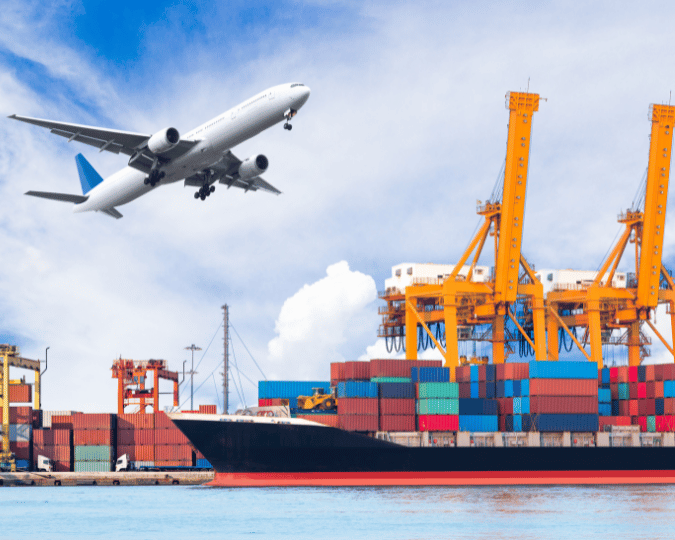
Cargo plane and ship representing air freight vs. ocean freight shipping options.
Blog

Air Freight vs. Ocean Freight: Which Shipping Method is Right for Your Business?

Choosing between air freight vs. ocean freight is a critical decision for businesses involved in international shipping. Each method has its own advantages in terms of cost, speed, cargo capacity, and reliability. Understanding these differences will help businesses make informed decisions that align with their budget, delivery timelines, and cargo requirements. In this blog, we compare air freight vs. ocean freight to help you determine which shipping solution is best for your business. 1. Cost Comparison – Air Freight vs. Ocean Freight One of the most significant factors when choosing between air freight and ocean freight is cost. πŸ“Œ Best Choice: If your shipment is urgent and lightweight, air freight is best. For large and heavy shipments, ocean freight is the more economical option. 2. Transit Time –Air Freight vs. Ocean Freight – How Fast Do You Need Your Shipment? πŸ“Œ Best Choice: If speed is a priority, air freight wins. If your shipment is not time-sensitive, ocean freight is a more practical choice. 3. Cargo Suitability – What Type of Goods Are You Shipping? πŸ“Œ Best Choice: Air freight is great for small, high-value, and urgent shipments, while ocean freight is better for heavy and bulk cargo. 4. Reliability & Safety – Ensuring Secure Shipments πŸ“Œ Best Choice: If reliability is a key concern, air freight is the safer and more predictable option. 5. Environmental Impact – Which One is More Sustainable? πŸ“Œ Best Choice: For eco-friendly shipping, ocean freight is the more sustainable choice. Final Decision: Air Freight vs. Ocean Freight – Which One Should You Choose? Here’s a quick summary to help you decide: Factor Air Freight βœ… Ocean Freight βœ… Cost Expensive ❌ Cost-effective βœ… Transit Time Fastest βœ… (1-7 days) Slow ❌ (20-40 days) Best for Cargo Small, high-value, perishable goods βœ… Large, bulky, heavy shipments βœ… Reliability Very reliable βœ… Subject to delays ❌ Sustainability High carbon emissions ❌ Environmentally friendly βœ… Choosing the Right Shipping Partner for Your Business Regardless of whether you choose air freight or ocean freight, working with an experienced logistics provider ensures a smooth shipping experience. At K Line Logistics Canada, we offer both air freight and ocean freight services with seamless customs clearance, cargo tracking, and end-to-end logistics support. πŸ“Œ Need expert guidance? πŸ‘‰ Contact K Line Logistics For the latest industry updates, read our feature on Trending Canada.

Load optimization in action with K Line Logistics Canada’s air freight and trucking services.
Blog

Best Load Optimization in North America

In today’s fast-paced world of logistics, load optimization is essential for businesses seeking efficiency, cost savings, and customer satisfaction. It involves the strategic use of logistics resourcesβ€”such as operators, vehicles, and storage spaceβ€”to maximize capacity without compromising safety or regulatory compliance. At K Line Logistics Canada, we understand that every business faces unique logistical challenges. That’s why we tailor our trucking, warehousing, and distribution services to ensure efficient load optimization across various industries, including manufacturing, pharmaceuticals, and e-commerce. How Does Load Optimization Work? Load optimization strategies vary between businesses depending on their supply chain networks, shipping partners, and operational goals. Here’s a step-by-step look at how it works: Step 1 – Data Collection and Input The first step involves collecting key data pointsβ€”such as product dimensions, weight capacities, and available container spaceβ€”and feeding them into optimization software. At K Line Logistics Canada, we leverage advanced software to enhance our customs brokerage and logistics processes, ensuring all shipments are optimized from the start. Step 2 – Load Planning Once data is entered, the software calculates the most efficient way to arrange items and utilize space. Businesses can simulate multiple scenarios to fine-tune their shipping plans and minimize errors before the actual delivery. K Line Logistics offers clients access to personalized load planning through our refrigerated cargo services, ensuring perishable goods are packed and shipped efficiently. Step 3 – Load Delivery After planning, the logistics team executes deliveries based on the software’s recommendations. Our ocean freight and air freight solutions ensure seamless transportation, no matter the size of the shipment or its destination. Step 4 – Continuous Improvement Feedback is crucial for optimizing future loads. At K Line Logistics Canada, we continuously collect data from each delivery to adjust our operations, ensuring ongoing efficiency and customer satisfaction. The Benefits of Load Optimization Implementing load optimization provides significant benefits for businesses: 1. Larger Per-Load Capacity With effective load optimization, businesses can fit more items into each shipment, maximizing their container usage and reducing the frequency of trips. 2. Lower Operating Costs By optimizing shipping loads, companies reduce operational costs, including fuel consumption and vehicle maintenance. Our FTL/LTL trucking services are designed to minimize trips while maintaining on-time deliveries. 3. Better Operational Efficiency Using load simulation software, companies can discover improved ways to arrange and transport goods. K Line Logistics’ warehousing and distribution services help businesses streamline their loading and unloading processes. 4. Enhanced Compliance Processes Companies transporting restricted or hazardous goods must adhere to specific regulations. With customs brokerage expertise, K Line Logistics ensures all goods comply with international regulations, simplifying the compliance process for our clients. 5. Greater Adaptability and Flexibility In today’s dynamic logistics landscape, businesses must adapt quickly. K Line Logistics Canada helps clients stay flexible by offering customized logistics solutions, from air freight to refrigerated cargo. Why Choose K Line Logistics Canada for Load Optimization? Unlike large, franchise-based logistics companies such as DSV, DB Schenker, and DHL Supply Chain, K Line Logistics Canada operates independently. This independence allows us to provide personalized service, whether your business needs a small shipment or a large logistics project. With a focus on customer-centric solutions, K Line Logistics Canada ensures that each shipment is optimized, compliant, and delivered efficiently. Our tailored approach gives us a competitive edge over other major players like FedEx Logistics, Agility Logistics, and Kerry Logistics. Optimize Your Logistics Operations Today with K Line Logistics Canada For businesses seeking efficient, cost-effective logistics solutions, K Line Logistics Canada is the ideal partner. With expertise in air and ocean freight, trucking, and more, we’re here to help you make the most of your logistics operations.

Scroll to Top